Introduction
introductionWhen patients walk into our Gangnam clinic asking about rhinoplasty, one of the first questions is often:
“Do I really need surgery, or can I get the same effect with fillers?”
It’s an understandable question. Non-surgical rhinoplasty — sometimes called the “liquid nose job” — has been trending globally, particularly in places like Seoul, where aesthetic treatments are part of everyday culture. The promise is appealing: a simple injection session, no general anesthesia, minimal downtime, and a new profile in under an hour.
But behind that glossy appeal lies a more nuanced reality. For patients who want their results to endure not just for months, but for years — and to integrate seamlessly with their facial harmony — the distinction between non-surgical and surgical rhinoplasty becomes critical.
At Arke Clinic in Gangnam, where we welcome both local patients and international visitors seeking natural refinement, this question comes up daily. To truly answer it, let’s look at what each approach can achieve, and what patients should expect in the long run.
The Allure of Non-Surgical Rhinoplasty
the-allure-of-non-surgical-rhinoplastyIn Seoul, non-surgical rhinoplasty has become especially popular among younger patients, busy professionals, and medical tourists who cannot spare weeks for recovery. Hyaluronic acid fillers — the most common material used — are injected along the nasal bridge or tip to disguise irregularities.
A few small, well-placed injections can:
Smooth the appearance of a dorsal hump.
Create a straighter bridge.
Lift a drooping tip.
Add height to a low bridge (common in many Asian patients seeking a more defined profile).
The benefits are clear:
Speed: The procedure takes 20–30 minutes, and most patients return to work or social activities immediately.
Affordability (short-term): Compared to surgical rhinoplasty, the upfront cost is significantly lower.
Reversibility: If the patient dislikes the outcome, an enzyme (hyaluronidase) can dissolve the filler.
For many, it feels like a “test drive” — a way to see what a new profile might look like without committing to surgery. And in the short term, the results can be striking.
The Hidden Limitations of Fillers
the-hidden-limitations-of-fillers
Yet, for all its convenience, non-surgical rhinoplasty has very real limitations.
To be candid, fillers don’t truly “reshape” the nose. They camouflage. They work by adding volume, not by removing or restructuring. This distinction is crucial.
Consider a dorsal hump. With fillers, we can inject above and below the hump to smooth its appearance. But the hump itself is still there — unaltered. Similarly, if the nasal tip is drooping because of weak cartilage support, filler may create an illusion of lift, but the underlying support issue remains.
Over time, this leads to several important considerations:
Temporary Results: Hyaluronic acid fillers typically last 6–18 months, depending on metabolism, product type, and injection technique. Maintenance treatments are required, meaning long-term costs add up.
Cumulative Filler Effect: Repeated treatments can gradually widen the nose or make it appear bulkier, especially if performed without restraint.
Skin and Tissue Stretching: Long-term or excessive filler use may stretch the delicate nasal skin, complicating future surgery.
Complications: While marketed as “low risk,” nasal filler carries some of the highest complication risks in facial aesthetics due to the nose’s vascular anatomy. Blocked blood vessels can cause skin necrosis or even blindness in rare cases.
At Arke Clinic, Dr. In-Bae Kim insists on precision techniques — often ultrasound-guided injection — to minimize these risks. Still, patients should recognize that non-surgical rhinoplasty is a temporary enhancement, not a structural solution.
Surgical Rhinoplasty: Precision and Permanence
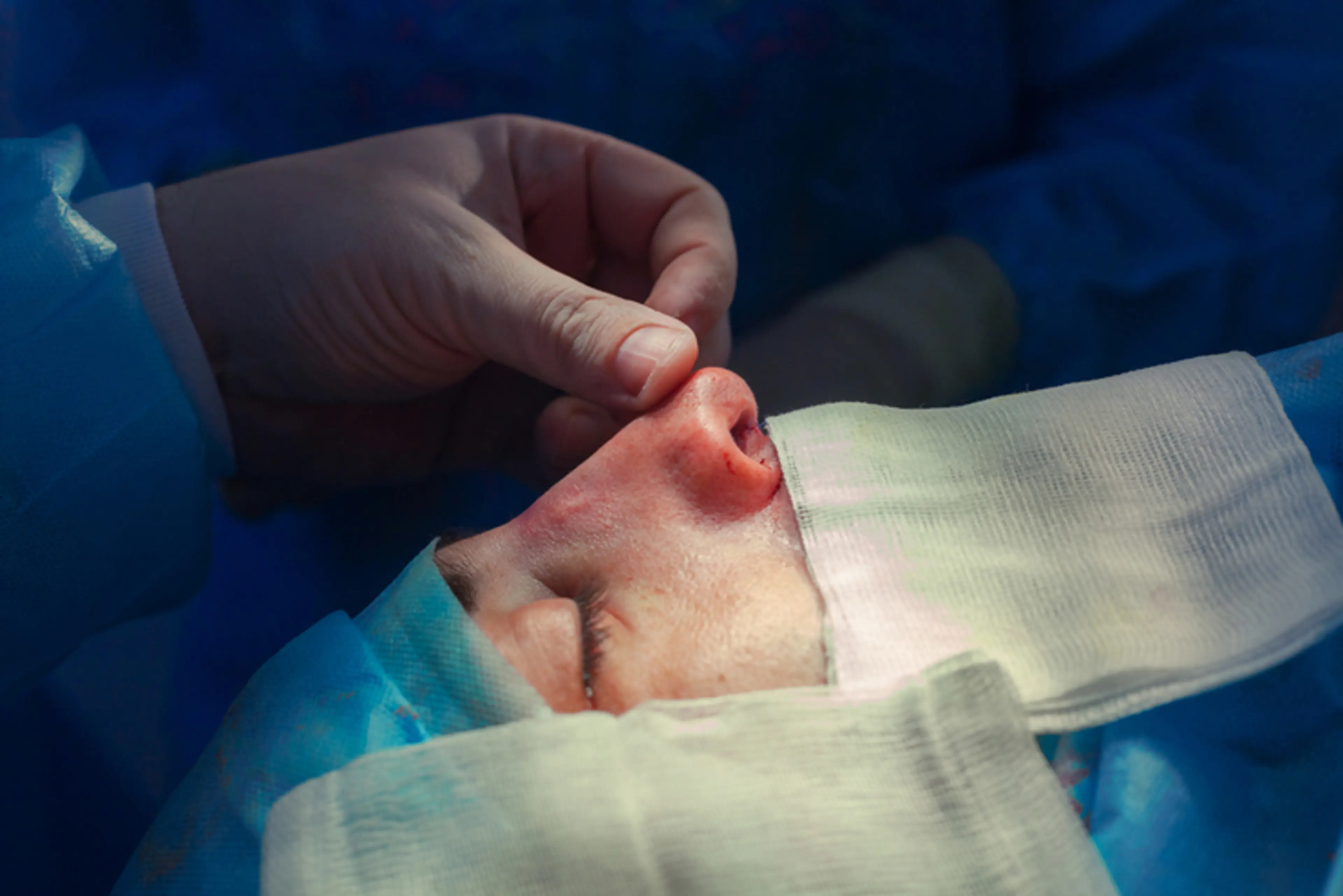
surgical-rhinoplasty:-precision-and-permanenceFor patients seeking long-term, structural improvement, surgical rhinoplasty remains the gold standard. Unlike fillers, which “mask,” surgery allows us to reshape cartilage, refine bone, and reposition soft tissue — creating results that last.
At Arke Clinic in Gangnam, surgical rhinoplasty is approached like restoring a sculpture: the goal is not to create an artificial-looking nose but to restore balance to the face.
Key Advantages of Surgical Rhinoplasty
key-advantages-of-surgical-rhinoplastyPermanent Results: Once the nose heals, the reshaped structure remains stable for years.
True Reshaping: Surgery can remove humps, narrow wide bridges, refine bulbous tips, or improve asymmetry — things fillers cannot achieve.
Functional Benefits: Breathing issues from a deviated septum or collapsed nasal valves can be corrected during surgery, improving both form and function.
Customization: Every rhinoplasty at Arke is personalized. Some patients need subtle refinement, others require reconstructive work after trauma or previous surgery.
What the Recovery Really Looks Like
what-the-recovery-really-looks-likeMany patients fear surgical downtime, but it may be less daunting than expected.
Swelling and bruising typically peak within the first week and subside significantly by the second.
Most patients return to social activities within 10–14 days.
Subtle refinements continue as swelling fully resolves over 6–12 months.
While it requires patience, most patients find the permanence and precision well worth the recovery.
The Long-Term Question: Which Works Better?
the-long-term-question:-which-works-better
If we define “better” as lasting improvement without repeated upkeep, the answer is clear: surgical rhinoplasty offers superior long-term outcomes.
But that doesn’t mean fillers have no role. They serve distinct purposes:
Non-surgical rhinoplasty is best for patients seeking short-term enhancement, those hesitant about surgery, or those who want to “preview” surgical results.
Surgical rhinoplasty is best for patients seeking permanent structural refinement, correction of functional issues, or significant aesthetic change.
A helpful analogy:
Fillers are like makeup — quick, flexible, and temporary.
Surgery is like sculpture — deliberate, structural, and lasting.
Cultural Context: Why This Matters in Korea
cultural-context:-why-this-matters-in-koreaKorea is often called the “plastic surgery capital of the world,” but what many don’t realize is that Korean patients — and increasingly, international visitors — prioritize natural outcomes above all. In Gangnam especially, where the competition among clinics is intense, artistry and subtlety distinguish the leading surgeons.
For nose surgery, this means avoiding the “one-size-fits-all” approach that once dominated the industry. Instead, surgeons like Dr. Kim at Arke Clinic emphasize:
Balancing the nose with other facial features (eyes, chin, jawline).
Using the patient’s own cartilage whenever possible for stability and naturalness.
Avoiding overcorrection, which can make the nose look “done.”
Non-surgical rhinoplasty fits into this cultural context as a bridge — a way for hesitant patients to experiment with change before fully committing. But in the long run, most who seek transformation ultimately turn to surgery for lasting results.
What Many Patients Overlook
what-many-patients-overlookA few insights rarely shared openly — but important to know:
Fillers Don’t Always Age Gracefully
Patients often believe fillers will simply dissolve without issue. But residual filler, fibrosis, or changes in skin elasticity may remain. Over time, this can subtly alter the nose’s natural contours.
The Emotional Timeline Matters
With fillers, patients may feel frustration as results fade, requiring repeated visits. With surgery, once the healing phase is complete, there is a sense of closure — the change is stable, allowing patients to move forward with confidence.
Safety is Technique-Dependent
The nose is one of the most dangerous areas for filler due to its complex blood supply. Complications are rare but real, and the injector’s experience makes a critical difference. At Arke Clinic, safety protocols and advanced imaging tools reduce risks significantly.
Choosing What’s Right for You
choosing-what's-right-for-youThe decision between non-surgical and surgical rhinoplasty ultimately depends on your goals, lifestyle, and comfort level with permanence.
If you want a quick, low-commitment fix, fillers may serve you well.
If you want a lifelong transformation — refined, natural, and structurally balanced — surgery is the wiser choice.
At Arke Clinic in Gangnam, consultations are never about pushing patients into surgery. Instead, they’re about education and clarity. Many patients leave their consultation saying, “I didn’t realize how different these two options really are.” That awareness alone often brings peace of mind.
Final Thought
final-thoughtWhether through the artistry of surgery or the subtlety of non-surgical enhancements, rhinoplasty is not about chasing perfection — it’s about achieving harmony and confidence.
If you’re considering rhinoplasty in Seoul, think not only about how you’ll look tomorrow, but also about how you want to feel five or ten years from now. A consultation with a trusted clinic like Arke in Gangnam, under the guidance of Dr. In-Bae Kim, can help you choose the path that aligns with your goals and your future self.